Tuesday, May 1, 2018

Other trouble

Now that my radiation was complete I enjoyed a break from cancer.  A year passed with no new worries.  My PSA tests showed no detectable cancer.  This might have been a great break from the cancer but some new issues surfaced to keep me focused on my health.

The first was my heart.  As I was looking through the medical reports from my radiation treatment I discovered an alarming point.  During radiation the Mayo team was taking my vital signs each day before treatment.  My resting heart rate has historically been very low (sub 50) which was not surprising given my exercise level. In the 2nd week of radiation my heart rate suddenly shot up to 110+.  This continued each day until the end of the radiation.  I measured my rate 6 weeks after radiation ended: it was still high!

Having discovered the issue, I contacted my internist and started down a new path on my health tour: what is going on with my heart??   This led to a meeting with a cardiologist.  The cardiologist looked at my CT scan summary from a year earlier and noticed a comment about calcium in my pelvic aorta.  "We should get a heart scan to see if you have high calcium".  Sure enough, my calcium score was high and I was put on a statin.  This, however, had nothing to do with my high heart rate.  EKGs where done, a stress test, and finally a meeting with a heart rhythm expert.  I was diagnosed with paroxysmal atrial tachycardia.  I was put on medication for a few months, ablation was discussed.  In the end, at recommendation from rhythm cardiologist, we dropped the medication (which was not having an affect) and decided no further treatment was needed for now.  My resting heart rate has dropped into the 60-80 range.

As has been the pattern of my last few years...investigating one malady leads to concern over another.  In this case it was the heart scan.  The heart scan gave me a calcium score but it also found a "3 millimeter nodule on my lungs".  Ahhh!!!!  Stop!!!   This was discussed with the oncologist and internist.  "Not related to the cancer".  "Let's keep an eye on that...no reason to do anything yet."

About this time another issue arrived: a discomfort in my abdomen when I slept.  More visits to the doctors, another CT scan, a colonoscopy (incidental...it was due) but nothing found.  The discomfort is still there and now noticeable during waking hours.  I am hoping this is due to diet, stress, whatever....not something grimmer.

Slowly but surely my confidence in my body was disappearing. I started feeling hopeless. I was not the picture of health.  I was a mess!

More details...
  • I cannot say why the team at Mayo failed to notice the alarming pulse increase. This is, in my opinion, one of several examples of how medicine has been ignoring a huge opportunity: applying artificial intelligence to medical data.  It is surprising that the Mayo staff could have missed this (why bother taking my vitals if you are not looking at the data?) but my assumption is that, for the team, each day was a new day.  Nobody was looking at the trend.  That is exactly the sort of thing machine learning would have caught (quickly).
  • The cardiologist's discovery of the calcium in my aorta is another example of medicine's failure to use AI.  If I had not experienced the heart rate issue the cardiologist would never have seen the CT scan.  It was only quite incidental that he saw it at all.  I almost walked out of his office in my first visit when I mentioned the CT scan.  He asked to take a look and saw the aorta calcium observation. If an AI algorithm was running over my data this would have been discovered a year earlier: not accidentally.
  • It is not clear what caused my heart issue. There are studies suggesting heart issues for men on ADT.  However, I had only been on Lupron for 4 months when my tachycardia arrived.   In my case it is hard not to wonder about the heart/ADT correlation as my heart seems to have improved post-ADT.


Thursday, June 15, 2017

Radiation

My 6-week radiation adventure began mid-march of 2017 in Northfield, Minnesota. Five days per week we drove south to Northfield from the cities for my daily treatment. Getting to each session was an adventure. This kind of radiation must be done when the bladder is full. So each day I would try and drink just enough water, at the right time, to make sure my bladder was full for the session.  This could be challenging if there were any delays with the machine. Several days there were mechanical problems with the machine...you can imagine the dancing that occurred.


The radiation treatments were very easy. Lie down, get positioned (the technicians create a couple of small tattoos that are used to repeat positioning each day), and wait for the bazillon dollar machine to do it's thing. From walking into the radiation room to exit was about 15 minutes but almost all of that time was positioning. The actual radiation time was probably less than 30 seconds each day.

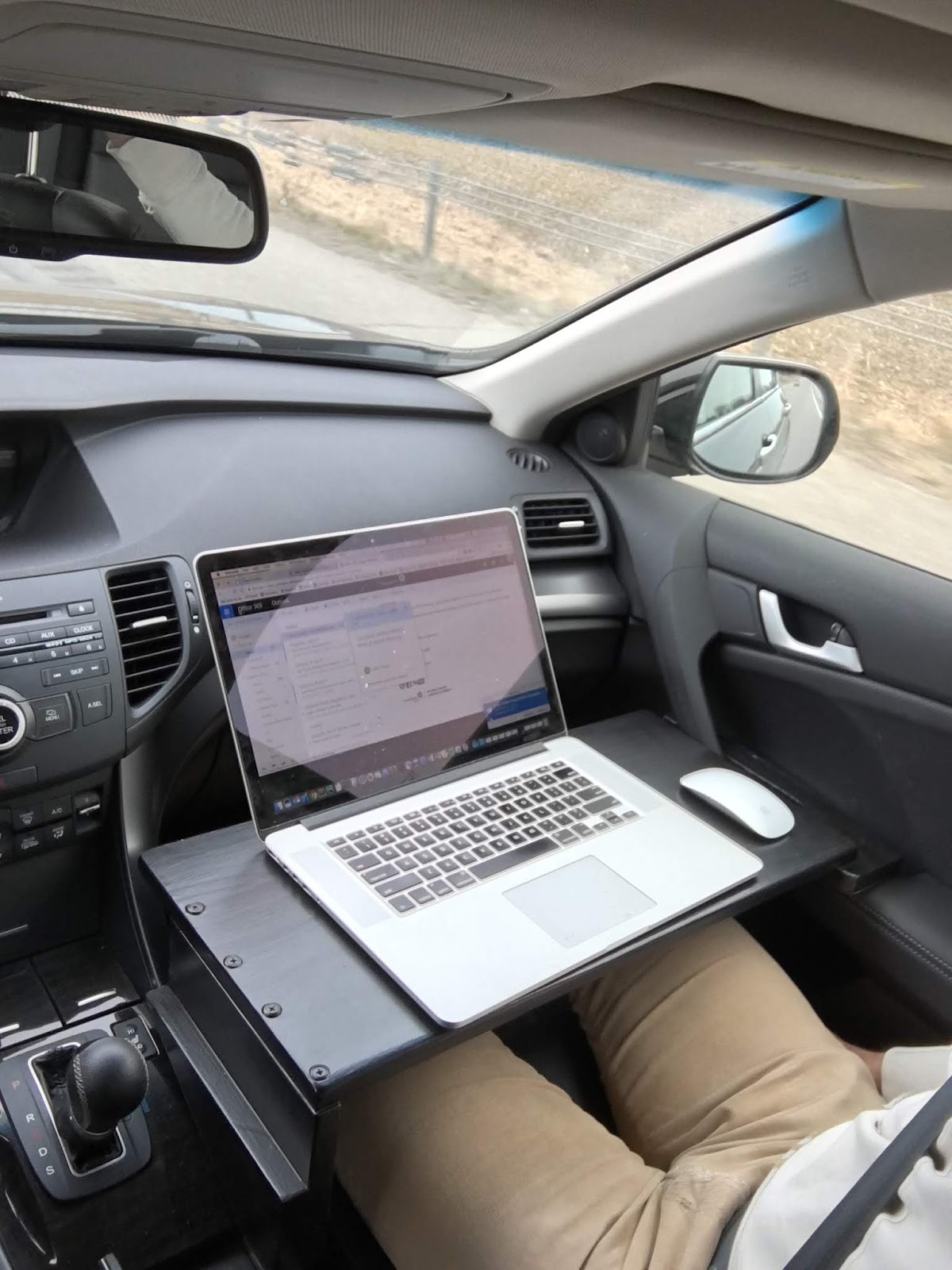
My wonderful wife drove me down each day (Northfield is about 45 minutes from the cities) so I would not lose any work time. I created a custom desk for my car so I could code while we drove.


It is common for radiation patients to have some side-effects from the radiation. For the most part I was quite lucky. I was even able to ride my bike back from Northfield to Saint Paul in the 4th week. I did have some butt pain (made bathroom visits difficult) for about 2 weeks near the end.

As in most of my cancer journey I was thoroughly impressed with the medical team. The oncologist, nurses, and technicians were all wonderful.  We had, amazingly, a lot of laughs.

Of course I also met some great guys and their wives. So much kindness.  :-)

After 36 sessions I hugged the machine, rang the bell, said goodbye and left, looking forward to a long vacation from cancer.

Wednesday, March 1, 2017

Cycling and Prostate Cancer

This post is for cyclists.

Being a rabid road-cyclist raises a lot of questions in the context of prostate cancer.  It is hard not to worry about the potential for prostate problems when riding a narrow bike seat (not much more than a pole).  Does road biking contribute to prostate cancer?  What about PSA testing and biking?  I've been treated for prostate cancer...are my days of riding over?

Here are my thoughts...


Causality

Like most men who are avid cyclists I wondered if there was any correlation between my prostate cancer and my riding.  Did I do this to myself?  There have been many studies done, some of which have found correlation but the studies are not conclusive.


PSA testing

Every man who has a PSA test wants to ensure that the test is as accurate as possible.  Inaccurate results can lead to anxiety and unnecessary biopsies.  Can cycling change the PSA level?  There have been a number of studies in this area as well.  Some of which have concluded that PSA levels are sometimes higher when there has been recent (within a few days) cycling activity.  In my own case this seems to be true.   During my first two worrisome PSA testing episodes I did the PSA the day after cycling and repeated the test after staying off the bike for a week.  In both cases my PSA level dropped ~1.5 ng/ml (5->3.5 and 12->10.5).

Post-treatment riding

Given my passion for cycling I was anxious to get back on the bike after surgery (robotic prostatectomy). Cycling has many benefits for me and one of the most important is the emotional value: cycling gets my endorphins going. When I discussed with my urologist post-surgery he was very supportive of resuming cycling.  He wanted to make sure I was healed before starting but after that it was simply a matter of "you can ride if it doesn't hurt".  My doctor asked that I wait 8 weeks. I had an unusually painful recovery period (see Recovery) so I was careful about my re-entry.  I decided to try one of several "prostate friendly" seats first. This worked but the ride was awful.  I found forums that suggested you can get "use to it" but I seriously doubt that.  In addition to the very awkward position they can really throw off your balance since there is nothing between your legs.


I then tried one of the many more conventional "ergo" seats. Selle SMP (not to be confused with Selle Italia) offers a full line of these. This was much better. These saddles take a lot weight off the perineum and distribute it to the sitz bones. The effect is, as expected, a lot of weight on the sitz bones.


In the end I found a seat that I loved that was pretty close to my old seat...just a bit more ergo [read: a slit down the middle to offer some relief to my perineum].

It took a couple more months for my prostate to feel 100% but eventually biking felt the same as pre-surgery. All good.

UPDATE [August 2018]: Professional riders adopting new seats

A year of relative peace

It has been a year since my last post. I am still in the clinical trial, albeit in the standard-of-care arm. The Enzalutamide  is performing...